How to Build Muscle: The Complete Beginner's Guide (2026)
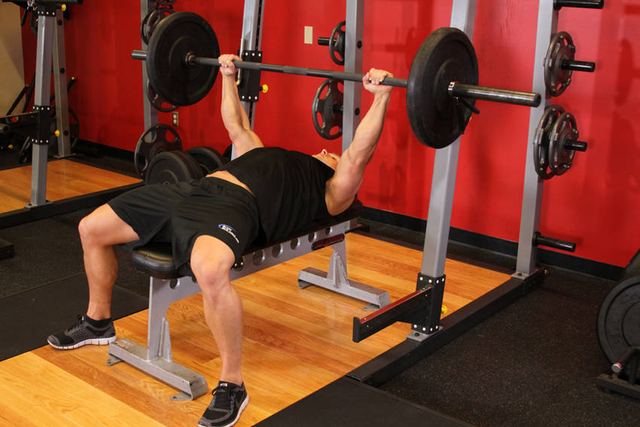
Building muscle is not a secret reserved for genetic freaks or people with hours to spend in the gym. The science is clear and surprisingly simple. Follow a handful of principles consistently for a year and you will look and feel like a different person. This guide explains each principle in plain language.
How muscle growth actually works
Muscle growth, called hypertrophy, happens when you challenge a muscle with more tension than it is used to. Training creates a signal inside the muscle fibers that switches on muscle protein synthesis, the process of building new muscle proteins. Over the following 24–48 hours, if you eat enough protein and recover well, your body builds slightly more muscle protein than it breaks down. Repeat that cycle hundreds of times and the fibers get thicker and stronger.
Three things need to come together:
- A training stimulus that is hard enough and gets harder over time.
- Raw materials, mainly protein and enough total energy.
- Recovery: sleep and rest days, when the actual building happens.
Miss any one of these and progress slows dramatically.
Principle 1: Progressive overload
If you do the same workout with the same weights forever, your body has no reason to adapt further. Progressive overload means doing a little more over time. You can progress by:
- Adding weight (for example 5 lb / 2.5 kg on a squat).
- Adding reps with the same weight.
- Adding sets.
- Using a harder variation (from incline push-ups to regular push-ups to decline push-ups).
- Improving range of motion and control.
Beginners can usually add weight or reps almost every week for the first several months. Write your workouts down. A notebook or app is the most underrated muscle-building tool. Read our full article on progressive overload.
Principle 2: Enough volume
Training volume is usually counted as the number of hard sets per muscle group per week. A large body of research, including meta-analyses, shows a dose-response relationship: more weekly sets tend to produce more growth, up to a point. Practical guidelines:
| Experience | Hard sets per muscle per week |
|---|---|
| Beginner (0–6 months) | 6–10 |
| Intermediate | 10–16 |
| Advanced | 12–20+ |
"Hard" sets are what count. A set where you stop with 10 reps left in the tank does very little. A set that ends 1–3 reps short of failure is a productive set.
Principle 3: Rep ranges and effort
For years people believed muscle only grows in the "hypertrophy range" of 8–12 reps. Newer research has shown that muscle growth is similar across a wide range, from about 6 to 30 reps, as long as sets are taken close to failure. Heavier loads (1–6 reps) build more maximal strength.
A practical approach for beginners:
- Big compound lifts (squats, presses, rows, deadlifts): 5–10 reps.
- Smaller exercises (curls, lateral raises, leg curls): 10–20 reps.
- Rest 1.5–3 minutes on big lifts and 60–90 seconds on small ones. Longer rests let you lift more and produce more growth than very short rests.
Principle 4: Train each muscle twice per week
Muscle protein synthesis stays elevated for roughly 24–48 hours after training in beginners. Training each muscle about twice per week tends to work better than once per week when total volume is the same. This is why full-body (3 days per week) and upper/lower (4 days per week) programs are so effective for beginners.
Principle 5: Choose the right exercises
Build your program on compound exercises that train several muscles at once and let you progress steadily:
- Legs: squats, leg press, Romanian deadlifts, lunges
- Chest: bench press, dumbbell press, push-ups, dips
- Back: pull-ups, lat pulldowns, rows
- Shoulders: overhead press, lateral raises
- Arms: curls, triceps pushdowns
Then add a few isolation exercises for muscles you want to emphasize. You do not need fancy machines or 15 exercises per workout. Five or six well-chosen exercises are plenty.
Principle 6: Eat enough protein
Protein provides the amino acids your body uses to build muscle. A frequently cited meta-analysis found that the benefit of protein for muscle gain levels off around 1.6 g per kg of body weight per day (about 0.7 g per pound), with some people benefiting from up to 2.2 g/kg. For a 180 lb (82 kg) man, that is roughly 130–180 g per day. For a 140 lb (64 kg) woman, roughly 100–140 g.
Spread it across 3–5 meals with about 25–40 g each. Good sources: chicken, turkey, lean beef, fish, eggs, Greek yogurt, cottage cheese, milk, beans, tofu, and protein powder when convenient. Details in our protein guide.
Principle 7: Eat enough calories
Building new tissue requires energy. Beginners with extra body fat can build muscle while losing fat ("body recomposition"), especially with high protein. But for most lean beginners, a small calorie surplus of about 5–15% above maintenance maximizes muscle gain while limiting fat gain. Aim to gain about 0.25–0.5% of body weight per week. If you gain faster than that, much of it is likely fat.
Find your numbers with the calorie calculator, or follow the 3,000-calorie muscle gain plan for men or the 2,200-calorie plan for women.
Principle 8: Sleep and recover
Sleep is when growth hormone peaks and when much of your body's repair work happens. Studies show that sleep restriction reduces muscle protein synthesis and, during dieting, increases the share of weight lost from muscle. Aim for 7–9 hours per night and take at least one or two rest days per week.
How much muscle can you build?
Natural muscle gain is slower than social media suggests. A rough guide for men who train and eat well (women typically gain about half these amounts in absolute terms, though the relative rate is similar):
| Training year | Approximate muscle gain |
|---|---|
| Year 1 | 10–20 lb (4.5–9 kg) |
| Year 2 | 5–10 lb (2–4.5 kg) |
| Year 3 | 3–5 lb (1.5–2 kg) |
| Year 4+ | 1–3 lb (0.5–1.5 kg) per year |
The first year is the most rewarding, so make it count with a proper plan.
A simple beginner program
Train three non-consecutive days per week, alternating workouts A and B:
Workout A
- Squat 3 × 6–8
- Bench press 3 × 6–8
- Lat pulldown 3 × 8–12
- Leg curl 2 × 10–12
- Lateral raise 2 × 12–15
- Plank 3 × 30–45 sec
Workout B
- Romanian deadlift 3 × 8–10
- Overhead press 3 × 6–10
- Cable row 3 × 8–12
- Leg press 2 × 10–12
- Biceps curl 2 × 10–12
- Triceps pushdown 2 × 10–12
Full, detailed versions with progressions: men's beginner gym plan, women's beginner gym plan, or the no-equipment home version.
The most common beginner mistakes
- Program hopping. Switching routines every two weeks means you never progress on anything. Stick with a program for at least 8–12 weeks.
- Ego lifting. Too much weight with poor form slows progress and causes injuries.
- Too little effort. Stopping sets when they become slightly uncomfortable.
- Too much too soon. Six days a week of two-hour workouts with no recovery.
- Not eating enough, especially protein.
- Skipping legs. Leg training builds the biggest muscles in your body and supports athletic performance.
- Relying on supplements. Only a few supplements have strong evidence (protein powder for convenience, creatine monohydrate, caffeine). None replace training and food.
What about supplements?
Creatine monohydrate is the most researched sports supplement. It consistently improves strength and muscle gain when combined with training, and is considered safe for healthy adults at 3–5 g per day. Protein powder is just convenient food. Caffeine can improve workout performance. Most other products, such as "testosterone boosters" and fat burners, have weak evidence. Talk to your doctor before taking supplements, especially if you have kidney problems or take medication.
Choosing your training split
Your "split" is how you organize your workouts across the week. For beginners, the best split is usually the simplest one you can follow consistently.
| Split | Days | Pros | Cons |
|---|---|---|---|
| Full body | 3 | Each muscle trained 3× per week; short weekly time | Sessions can feel long with many exercises |
| Upper / lower | 4 | Good balance of frequency and volume | Requires 4 days per week |
| Push / pull / legs | 3 or 6 | Lots of volume per muscle | 6 days is too much for most beginners |
| "Bro split" (one muscle per day) | 5 | Popular, easy to understand | Each muscle trained only once a week |
Start with full body three days per week. After 6–12 months, an upper/lower split is a natural next step. Our men's and women's intermediate programs use this structure.
Why technique comes first
In your first months, much of your strength gain comes from your nervous system learning to coordinate the movement. Good technique makes every rep more effective because the target muscle does the work, and it keeps your joints healthy for the decades of training ahead. Before adding weight, ask yourself: could I perform this rep exactly the same way ten times in a row? If not, keep the weight the same.
Helpful technique habits:
- Read the exercise guide and watch the animation before trying a new movement.
- Film one set from the side every week and compare with the instructions.
- Use a full range of motion that you can control.
- Lower the weight under control for 2–3 seconds.
- Brace your core before every rep on squats, deadlifts, rows and presses.
What a great training session looks like
- Arrive with a plan and know your numbers from last time.
- Warm up for 5–10 minutes with light cardio and a few mobility drills.
- Ramp up with 1–3 lighter warm-up sets on your first exercise.
- Hit your working sets with full focus and rest 1.5–3 minutes between hard sets of big lifts.
- Finish accessories with 60–90 seconds of rest.
- Log everything before you leave.
A session like this rarely needs more than 60 minutes. Longer is not better if quality drops.
A sample muscle-building day of eating
Here is what a muscle-building day might look like for a 170 lb (77 kg) person aiming for about 2,700 calories and 150 g of protein:
- Breakfast: oatmeal with a scoop of whey, a banana and a tablespoon of peanut butter.
- Lunch: chicken burrito bowl with rice, black beans, salsa and avocado.
- Pre-workout snack: beef jerky and a banana.
- Post-workout: a glass of low-fat chocolate milk.
- Dinner: steak, a large sweet potato and green beans.
- Evening: Greek yogurt with berries or cottage cheese.
For a full week of meals, see the men's muscle gain plan or the women's lean muscle plan.
How to know it is working
Muscle growth is slow and hard to see day to day. Track these signals monthly:
- Strength on main lifts is going up.
- Body weight is rising slowly (if you are lean and eating in a surplus) or holding steady while your waist shrinks (if you are recomposing).
- Arm, chest, thigh and waist measurements are changing in the right direction.
- Photos taken in the same light show more shape.
If two months pass with no change in any of these, adjust one thing at a time: add 200 calories per day, add 2–4 weekly sets for lagging muscles, or improve sleep.
Building muscle as a woman
Everything in this guide applies to women. In fact, studies show women gain muscle at a similar relative rate to men when they start training, even though absolute gains are smaller. Women may tolerate slightly higher training volumes and recover faster between sets. Many women under-eat protein and calories, which is often the main thing holding back progress. Our women's hub has programs and meal plans tailored to common goals.
The bottom line
To build muscle: follow a structured program built on compound lifts, train each muscle about twice per week with 6–20 hard sets, add weight or reps over time, eat 1.6–2.2 g/kg of protein in a slight calorie surplus, and sleep 7–9 hours. Do that consistently for a year and the results will speak for themselves.
Frequently asked questions
How fast can a beginner build muscle?
Beginners who train and eat well can often gain around 0.5–2 lb (0.25–1 kg) of muscle per month in the first year, with men typically at the higher end.
Can I build muscle without a gym?
Yes. Bodyweight exercises and dumbbells taken close to failure can build plenty of muscle, especially for beginners.
Do I need to go to failure?
Not on every set. Ending most sets 1–3 reps short of failure gives nearly the same results with less fatigue and injury risk.
Can women build muscle the same way?
Yes. Women respond to resistance training in a similar way relative to their starting size. The same principles apply.
Should I do cardio while building muscle?
Yes, moderate cardio supports heart health and does not prevent muscle growth if total volume and calories are managed.
Disclaimer: This article is for general education and is not medical advice. Consult a doctor or qualified professional before making major changes to your exercise or diet, especially if you have a health condition.
Keep reading
How to Lose Belly Fat: A Science-Based Guide for Men and Women
Why belly fat is stubborn, why crunches alone will not burn it, and the exact nutrition, training, sleep and stress habits that actually shrink your waist.
The 12 Best Glute Exercises for Women (Home & Gym) + Sample Workouts
The most effective glute exercises for women, explained: hip thrusts, RDLs, split squats, abduction and more, plus how to program them for stronger, rounder glutes.
How Much Protein Do You Need Per Day? (For Fat Loss, Muscle & Health)
How much protein you really need for weight loss, muscle building and healthy aging, the best American protein foods, timing, and a sample high-protein day.